


The discourse on AI in schools has gotten heated, and I think that’s a good thing.
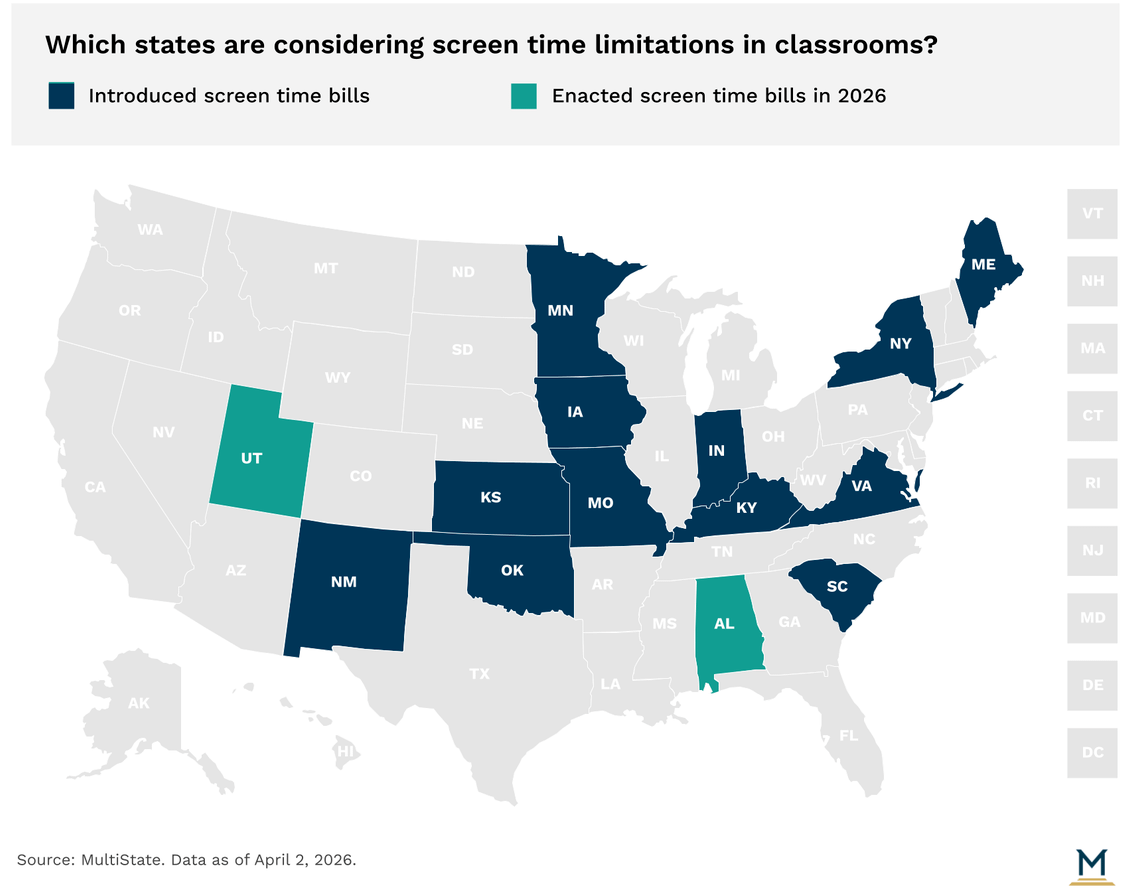
Parents are showing up to school board meetings that end up lasting seven hours. Lawmakers on both sides of the aisle are introducing legislation to limit students’ screen time, restrict AI use in schools, and give families more say in what happens to their children in classrooms. Gen Z, the generation that grew up inside the attention economy, is among the most skeptical.
But thoughtful colleagues I respect are making important distinctions that the loudest voices in this debate tend to shout over.
Nick Potkalitsky has been tracking an emerging and genuinely contradictory trend: state legislatures that are simultaneously mandating AI literacy and capping screen time by grade level, sometimes in different committees of the same statehouse. As he points out, you cannot require students to develop AI literacy while banning the devices they would use to do it. Blanket bans that don’t distinguish between harmful and helpful uses of technology will create their own problems.

Michael Horn is making another compelling point: the tension between embracing AI and pulling back from screens only looks like a contradiction if we treat all technology use as the same thing. His advice is the same as I give and is worth quoting directly: “Do not lead with the technology.” Start with what you want students to know and be able to do. Then design backward.
I agree with both of them. And I want to push one step further.
The backlash we are seeing is not just about technology. It is also about trust.
Parents are frightened, and their fear is legitimate. Their children are anxious, increasingly unhappy, struggling to concentrate, and falling behind academically. They watched schools fail their kids during the pandemic and felt they had no voice in how that crisis was handled. They are reading headlines about entry-level jobs disappearing and wondering how their children will compete. They look at schools adding AI tools and see the same institutions that gave them distance learning debacles now chasing the next shiny thing. And they remain unsure of how much, or even if, AI is really helping their children in the classroom. The absence of clear state guidance, rigorous research, or consistent vetting processes at the district level isn’t doing much to restore trust.
But what parents ultimately want goes well beyond getting tech use in check: caring, individualized attention and joyful, challenging teaching and learning. The technology is the target. But the anger is somewhat misplaced. What parents should really be reacting to is an outdated, unresponsive system that has never been built around children’s needs and interests. A system that failed their kids during the pandemic and offered no accountability. A system that sorts children into programs rather than seeing them as individuals. A system built, in too many ways, around adult interests, adult schedules, adult institutions, and adult job protections rather than around what children actually need to thrive. AI walked into that justified rage and became the lightning rod.
The corrective is necessary. Kids do need limits. Schools do need to listen to families. The screen time conversation is overdue, and the phone bans many districts have implemented appear to be making a real difference in the social dynamics of schools. I support all of that.
But here is what keeps me up at night: even without the screens, our schools are not joyful, connected places that prepare children to thrive. They were not before the pandemic. They are not now. Teachers are overwhelmed and burnt out, unable to address the learning gaps and social-emotional needs of their students. The curriculum is often disconnected from the world students are actually entering. The system was not designed to see every child as an individual, and no amount of screen time reduction changes that fundamental design failure.
So we will be in corrective mode for a while, pulling back, rebuilding trust, establishing guardrails. That is appropriate. The question is: then what?
Horn is right that the key question is not whether schools are for or against AI. It is whether they have a clear and coherent vision of what learning is for in the first place. That vision has to start with the human. With relationships. With the conviction that every child deserves to be known, challenged, and met where they are by adults who have the time and insight to actually see them.
Technology, including AI, should be evaluated against that standard. Does an administrative tool give teachers more time and better insight to build strong relationships with students? Does an AI tutor help a struggling reader get the support she needs before the gap becomes a chasm? Does an application help kids think more critically and deeply? Does a data-analysis tool help schools and states measure what families believe really matters? Can AI be used—in the hands of talented teachers—to stimulate deeper and more critical thinking? Can it help teachers make evidence-backed decisions for a given child’s unique needs? If yes, then it belongs in schools. If it replaces human judgment and human connection rather than supporting them, then it doesn’t.
Done right, AI could actually be part of the answer, reducing teachers’ administrative burdens while giving them the time and insight to finally do what they became teachers to do. But none of that will come without a clear vision and a drive to make the technologies work for kids and in service of a bolder vision. It won’t happen without commensurate work to address the underlying incentives and structures that lock in broken systems.
My advice to forward-thinking educators and system leaders who fear the backlash right now is simple. Use this moment to listen, genuinely and without defensiveness, to what parents and students are telling you. Take their concerns seriously, not as obstacles to manage but as information about what your community needs from its schools. Have honest conversations about what people actually want school to be. And when you talk about AI, talk about it only in service of human thriving, never as an end in itself.
The backlash is a signal. What it is telling us is not to abandon the technology altogether. It is telling us to finally build schools worthy of our children’s trust.
That is a harder task than banning phones. It is also the only one that matters.
New Commentary and Research
How can AI help?
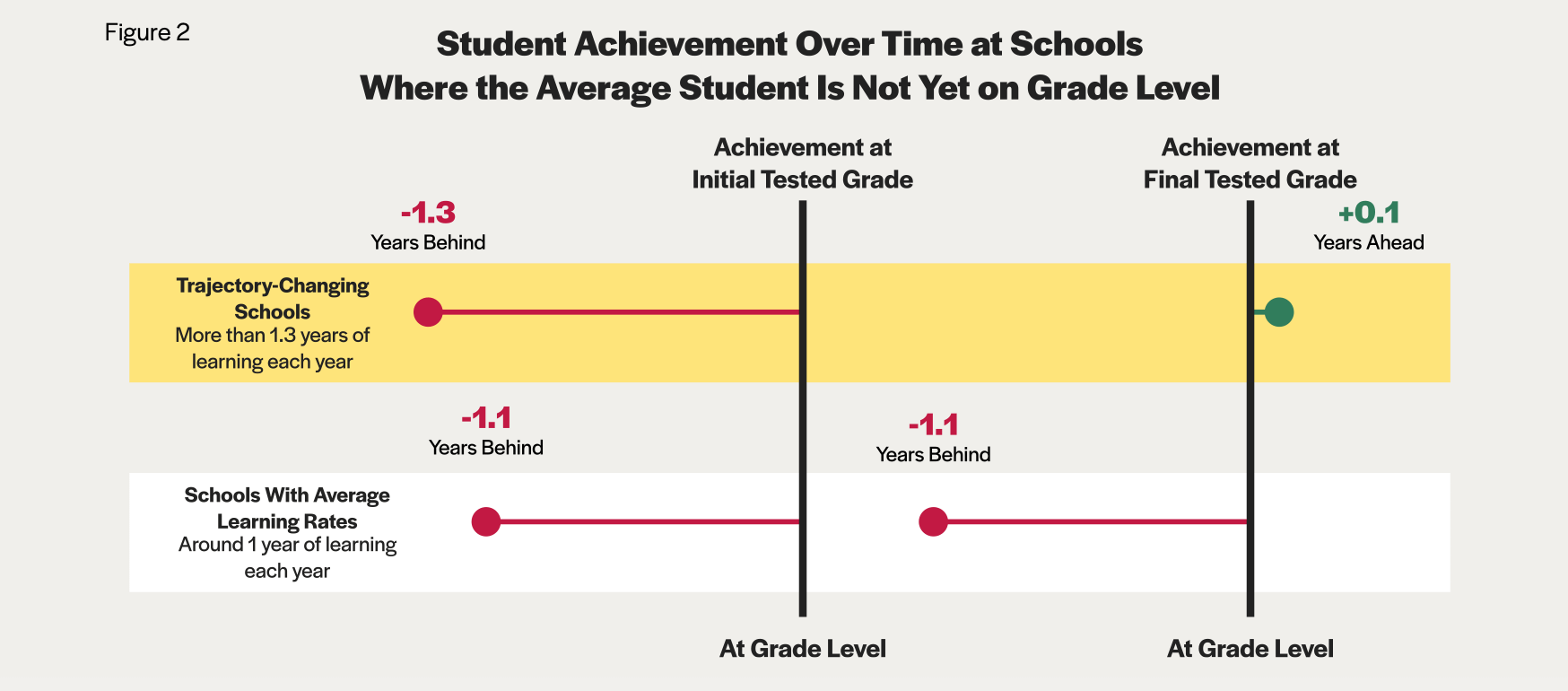
Dan Weisberg, former deputy chancellor of NYC Public Schools, reminds us in this new piece in The 74 that schools are terrible at catching kids up. AI can help.
And this Politico story about Estonia’s approach to AI in education is worth a read. Estonia is trying to create socratic tutors with AI and is taking a different approach to regulation. “(Banning technology) is the wrong fight,” said one university teacher in the article. “The challenge is not how to keep AI out,” she said. “The challenge is how to put AI into the learning process so that it accelerates and enhances cognitive growth rather than replacing thinking.”
Getting beyond the lightbulb moment
Accenture CEO Julie Sweet is making monumental shifts at her company. She’s changed the organization’s 50-year-old structure and tied promotions to establishing AI fluency. It will be interesting to see the post-lightbulb phase at Accenture unfold in real time.
What are schools for now?

In a new SSIR article, my friend Frances Messano, CEO of NewSchools Venture Fund, says that reinvention in education will happen through:
Having a coherent north star that defines where we are going
Coming up with a new way of working / operating model
A new approach to funding / “patient capital”
Co-creation with communities
Disciplined learning and accountability
(Julie Sweet’s strategy hits many of these same points, by the way.)
A major retraction
A widely cited study showing positive learning results from ChatGPT has been retracted after the editors at Nature found “discrepancies” in the analysis. Crazy times. Buyer beware. It’s unclear why the errors were not caught pre-publication.
A few other interesting tidbits
Proposal to ban AI companions for minors advances in Senate: Legislators want to limit chatbot interactions for children and teens.
Students Will Take the Lead on Crafting a Model AI Policy for Schools: AASA (the School Superintendents Association) will include students in a conference to craft AI policy.
SUNY Sets Systemwide AI Policy: New York’s state universities have adopted an AI policy.
11 AI Prompts Every Teacher Should Know: Concrete, on-the-ground advice for avoiding the worst of AI, if you’re going to use it for lesson planning.
One Useful Thing
I get a lot of questions from friends and colleagues about how I am using AI in my work and how I am leading my organization around AI use. In the spirit of Ethan Mollick’s Substack, I thought I’d start by giving you some of my personal use cases and learnings. I hope this will inspire you to share your feedback either below in the comments or with me directly. Here’s a recent big aha: The CRPE writing coach.
Recently I was inspired by a friend leading a large research organization to develop an organizational tool for writing in the “CRPE Way.” We’ve been around 30-plus years, and I find myself giving the same feedback to my staff again and again. Things like: “Don’t bury the lede! Put your most important findings and insights right up front! Make your recommendations clear and actionable for specific audiences! Don’t use lingo! Make sure your claims and assertions are sufficiently supported by your evidence!”
So I worked with Claude and my editorial director to develop a prompt that everyone in the org should use to get feedback from an LLM before a paper goes through our editorial process. Next we may create a Claude Project and load our best reports and our style guide to help train a CRPE-specific writing coach. We discourage folks from using AI to draft their work, and they are expected to use their own judgement on whether to take the advice. We’re testing and refining to make the tool better.
Ultimately, though, the CRPE QA process remains unchanged. We still have internal and external peer review by humans. But this little tool is already giving folks great feedback and products are coming to me in much better shape!
-RL
Thanks to June Han and Dan Silver for contributions. I sometimes use Claude to smooth and edit my writing. However, all errors and em-dashes are mine alone.
PS: Learn More Today about Early Adopter Districts and States
Our AI research team will be hosting a webinar later today on findings from our recent briefs on early adopters, as well as CRPE’s other key streams of AI research. Details below.

Loved reading this post and could not agree more! I would love to discuss this at length with you on the Education Futures podcast Robin, we just had Babak Mostaghimi on the show and a conversation with you would make for the perfect next conversation.
I am glad to learn how you are using AI as I build out some editorial processes! I have been getting to know and even enjoy Claude Cowork as well.